The Power of Our Minds: How Our Thoughts Become Our Reality
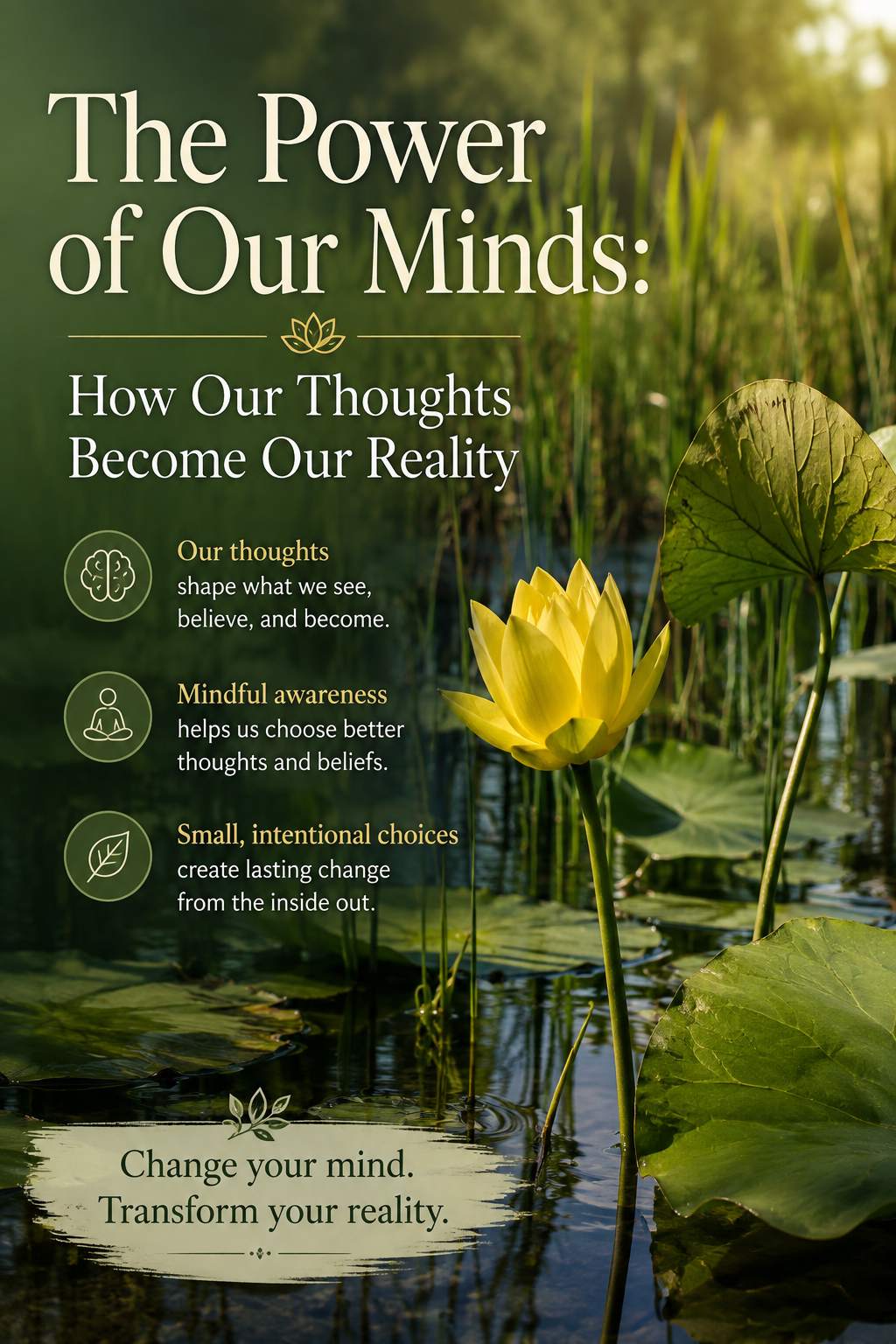
Have you ever noticed how a single recurring thought can change the entire feel of your day? If you wake up convinced that everything is going wrong, your eyes instantly spot the red lights, the spilled coffee, and the blunt email. Conversely, when you shift your internal focus toward appreciation and possibility, the world seems to open up.
This isn't magic, and it isn't just wishful thinking. The simple truth is that our brains are not passive recorders of the world around us. Instead, they are active creators. What we choose to focus on, replay, and believe within our inner world fundamentally shapes the physical reality we experience on the outside. By understanding how this works, we can quite literally change our well-being from the inside out.
The Brain as a Reality Creator
For a long time, people believed the brain was like a camera, capturing a fixed picture of the world. Modern science shows us a very different reality: the brain acts more like a sculptor. Every second, your mind is flooded with millions of pieces of sensory data. To keep you from short-circuiting, your brain has to filter that information, choosing what to highlight and what to ignore.
What dictates the filter? Your dominant thoughts, beliefs, and past experiences. If you consistently tell yourself a story—whether it is "I am always unsupported" or "I am capable of finding a way through"—your brain adjusts its filters to prove you right.
In psychology, this is beautifully supported by concepts of mindfulness and cognitive training. When we deliberately guide our attention, we change the physical pathways of the brain. This concept, known as neuroplasticity, proves that our brains remain adaptable throughout our entire lives. You can explore the foundational science behind this adaptability in this comprehensive study on how neuroplasticity impacts development and aging. The pathways we use the most become stronger and more automatic, while the ones we ignore begin to fade away.
From Thought to Muscle: Real-World Examples
To see how powerful this connection is, we only have to look at how the mind directs the body.
Consider a musician picking up a guitar. Before their fingers ever press down on the strings to form a chord, the movement happens in the mind. Neuroscientific studies have shown that simply visualizing a physical action—like practicing a sequence of notes or moving a specific muscle group—fires the exact same neural pathways as actually doing it in physical reality.
This connection is highly practical for physical recovery and physical maintenance. When a specific part of the body experiences an injury or a neurological disruption, the neural "map" for that area can become fuzzy or disconnected. By using targeted, intentional movement protocols, we can gently remind the nervous system of its natural alignment.
For instance, dedicating time to focused physical resets—such as a gentle walk or restorative movement class—sends a direct, stabilizing signal back to the brain. You are using the mind and deliberate movement to rebuild the body’s internal map. Over time, these small, consistent actions reshape the nervous system, proving that physical stability begins with an intentional internal choice.
Cultivating a Mindful Filter for Human Behavior
It is completely natural to experience challenging moments where our thoughts run on emotional autopilot. We might feel a sudden spike of defensiveness, or find ourselves looking at a new person or situation with an immediate sense of doubt.
When this happens, the goal isn't to force a fake positive thought over the top of how we feel. Instead, the healthiest approach is to introduce a gentle, conscious filter that allows us to look at situations clearly and objectively.
Imagine meeting someone new or navigating a complex relationship. Instead of letting old, automatic fears dictate how you feel, you can step back and quietly observe the situation through clear, supportive questions:
Is this person respecting basic boundaries?
Is their behavior consistent with their words?
Am I reacting to what is happening right now, or am I reacting to an old memory?
By processing human behavior through a steady, intentional lens, we protect our inner peace. It allows us to understand the needs of others without absorbing their chaos, keeping us emotionally grounded and healthy inside.
How to Think Yourself Healthier
If our thoughts can create patterns of tension, they can also create patterns of ease. Here are three gentle, practical ways to use your mind to support your physical well-being:
1. Shift Your Environment and Visual Focus
Our minds are deeply influenced by the imagery we consume. Living in spaces that feel open, vibrant, and aligned with nature can radically lower the body’s baseline stress levels. If you thrive around life-giving landscapes, like tall evergreens, your nervous system interprets those visuals as a cue of safety. What we bring in via social media or television also creates a huge impact within our psyche. Make it a priority to surround yourself with environments—and mental imagery—that make your spirit feel expansive rather than fearful or restricted.
2. Practice Wise Discernment with Your History
We all have a past, but the relationship we hold with our memories is entirely up to us. You do not have to view your history as an overwhelming weight. It is entirely possible to process your experiences, extract the wisdom, and hold a neutral, peaceful stance toward what came before. When you view your past neutrally, you free up massive amounts of mental energy to focus on the present moment.
3. Use Intentional Somatic Resets
When your nervous system feels off-kilter, don't try to just "think" your way out of it—bring the body along. Use gentle, natural wellness practices to ground yourself. This can be as simple as stepping outside to breathe fresh, clean air, utilizing soothing, fragrance-free natural products, or practicing a known, safe exercise that you know calms you. For more inspiration on building these habits, check out the holistic health resources and guides available through the Finding Point + Wellbeing Journal or explore targeted support options via our Workshops or a 1:1 Session.
The Lasting Impression
Your mind is the gatekeeper of your life. By choosing where you place your attention, implementing clear, compassionate filters for the world around you, and using intentional movement to support your physical body, you take active ownership of your health.
We are not victims of our automatic thoughts or our external circumstances. With patience, gentle practice, and a commitment to internal integrity, we can cultivate a mental landscape that directly brings forth a healthier, more peaceful physical reality.
