Somatic Self-Regulation: Developing Inner Safety
Somatic self-regulation is one of those gentle life skills that can quietly change the way we move through stress, anxiety, emotional overwhelm, relationship tension, and everyday pressure. I like to think of it as learning how to listen to the body with kindness, instead of trying to force ourselves to calm down through thought alone. When we practice somatic self-regulation, we are learning to notice what is happening inside of us, respond with care, and slowly build a stronger sense of internal safety. This matters because emotional regulation is not only something we do in the mind. It is also something we can support through the body, breath, movement, awareness, and compassionate self-connection.
At Finding Point, whole-person wellness often begins with the understanding that our emotional health and physical experience are connected. We may feel worry as tightness in the chest, sadness as heaviness in the body, or stress as a restless urge to keep moving. These body signals are not failures. They are information. They are invitations to pause, soften, and reconnect with ourselves in a more compassionate way.
For many of us, stress is easier to recognize after it has already become loud. We may notice that we are snapping, shutting down, overthinking, people-pleasing, avoiding, or feeling disconnected from ourselves. Somatic self-regulation gives us a way to notice the earlier signs. It helps us gently ask, “What is my body trying to tell me?” before we push ourselves past our limits. In this way, somatic self-regulation becomes a practical emotional health skill, not a complicated technique or something we have to do perfectly.
What Is Somatic Self-Regulation?
Somatic self-regulation means using the body to support emotional balance. “Somatic” simply means body-based. Instead of only asking, “What am I thinking?” we also begin asking, “What am I feeling in my body?” This gentle shift helps us understand stress in a fuller way. We start noticing things like our breathing, muscle tension, posture, heart rate, temperature, or the need to move, rest, cry, stretch, or take space.
Many emotional health practices teach us that the body and mind are always having a conversation. The National Institute of Mental Health explains that stress can affect both emotional and physical well-being, which is why learning to recognize stress signals matters. Somatic self-regulation gives us simple ways to respond before stress becomes too overwhelming.
In simple terms, somatic self-regulation is about working with the body instead of working against it. If my shoulders are tight, my breath is shallow, and my thoughts are racing, I may not need to argue with myself or shame myself into feeling better. I may need to slow down, feel my feet, soften my jaw, look around the room, and give my body a clear message that I am safe enough in this moment. This is a small but powerful shift. We are not ignoring our emotions. We are learning how to meet them in a way the body can understand.
This is also why somatic self-regulation can be helpful for people who already understand their patterns but still feel stuck in them. Sometimes we know why we feel anxious, why conflict is hard, or why we freeze during certain conversations, but the body still reacts before the mind can catch up. Body-based emotional regulation can help bridge that gap. It gives us something kind and doable to practice in the moment, especially when words are not enough.
Why the Body Needs Gentle Support
When we feel emotionally activated, the body may prepare us to protect ourselves. This can show up as racing thoughts, shallow breathing, irritability, numbness, tearfulness, tension, or difficulty focusing. In those moments, we may try to talk ourselves out of what we feel, but the body may still be asking for care. Somatic practices help us meet that inner experience with patience instead of pressure.
This is where emotional self-regulation becomes deeply practical. We are not trying to erase feelings or pretend everything is fine. We are learning to stay with ourselves in a steadier way. Over time, this can help us respond rather than react, pause before shutting down, and offer ourselves the same compassion we might give someone we love.
Gentle body awareness can also help us build trust with ourselves. Instead of treating our physical signals as problems to hide or overcome, we begin to see them as communication. A clenched stomach may be asking for safety. A tight chest may be asking for breath and space. Heavy fatigue may be asking us to stop pushing. When we respond with care, we teach ourselves that our needs matter. That is a deeply healing message for the nervous system and for emotional wellness.
A Gentle Example of Somatic Self-Regulation
Imagine we receive a difficult message and immediately feel our stomach drop. Our shoulders rise, our jaw tightens, and our mind starts filling in every possible outcome. A common response might be to rush, defend, over-explain, or withdraw. A somatic response might sound more like this: “I notice my body feels tense. I am going to place both feet on the floor, take a slow breath, and give myself a moment before I respond.”
This small pause can be powerful. It reminds the body that we are here, we have choices, and we do not have to move faster than our nervous system can comfortably follow. The goal is not instant calm. The goal is connection. When we reconnect with the body, we often regain access to clarity, emotional steadiness, and a kinder inner voice.
Another example might be walking into a family gathering, work meeting, or difficult conversation and noticing that we feel guarded before anything has even happened. Rather than criticizing ourselves for being sensitive, we can pause and say, “My body is preparing for something. I can be gentle with that.” We might take a slow look around the room, notice one supportive person, feel the chair beneath us, or give ourselves permission to step away for a moment if needed. This is not avoidance. It is self-support.
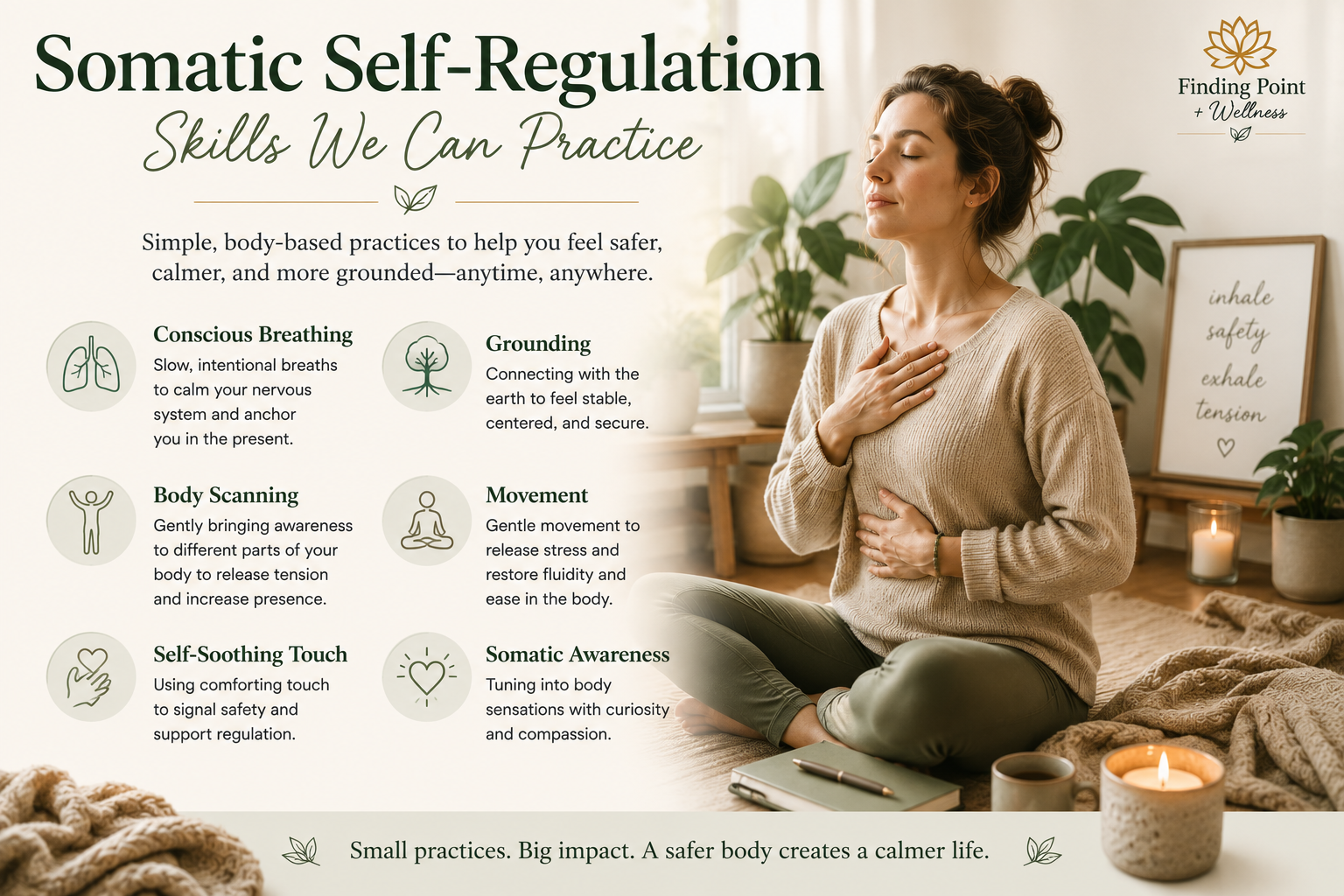
Somatic Self-Regulation Skills We Can Practice
One of the most comforting things about somatic self-regulation is that it does not have to be complicated. We can begin with small, ordinary practices that fit into real life.
· Feet on the floor: I place both feet on the ground and gently notice the support beneath me. I may press my toes down, soften my knees, and remind myself, “I am here in this moment.”
· Soft breathing: Instead of forcing deep breaths, we can simply slow the exhale. A longer exhale often gives the body a gentle cue that it can begin to settle.
· Hand to heart or body: Placing a hand on the chest, belly, arm, or another comfortable place can offer warmth and reassurance. This can feel like saying, “I am with myself.”
· Orienting to the room: We can slowly look around and name what we see: a window, a chair, a color, a soft texture. This brings attention back to the present moment.
· Gentle movement: Rolling the shoulders, stretching your hands, walking slowly, or lightly swaying can help the body move emotional energy in a non-forceful way.
The American Psychological Association describes how stress can affect the body in many ways, including muscles, breathing, digestion, and mood. This is why gentle body-based practices can be so meaningful. We are not “overreacting” when stress shows up physically. We are human, and our bodies are part of our emotional experience.
How Somatic Self-Regulation Supports Emotional Health
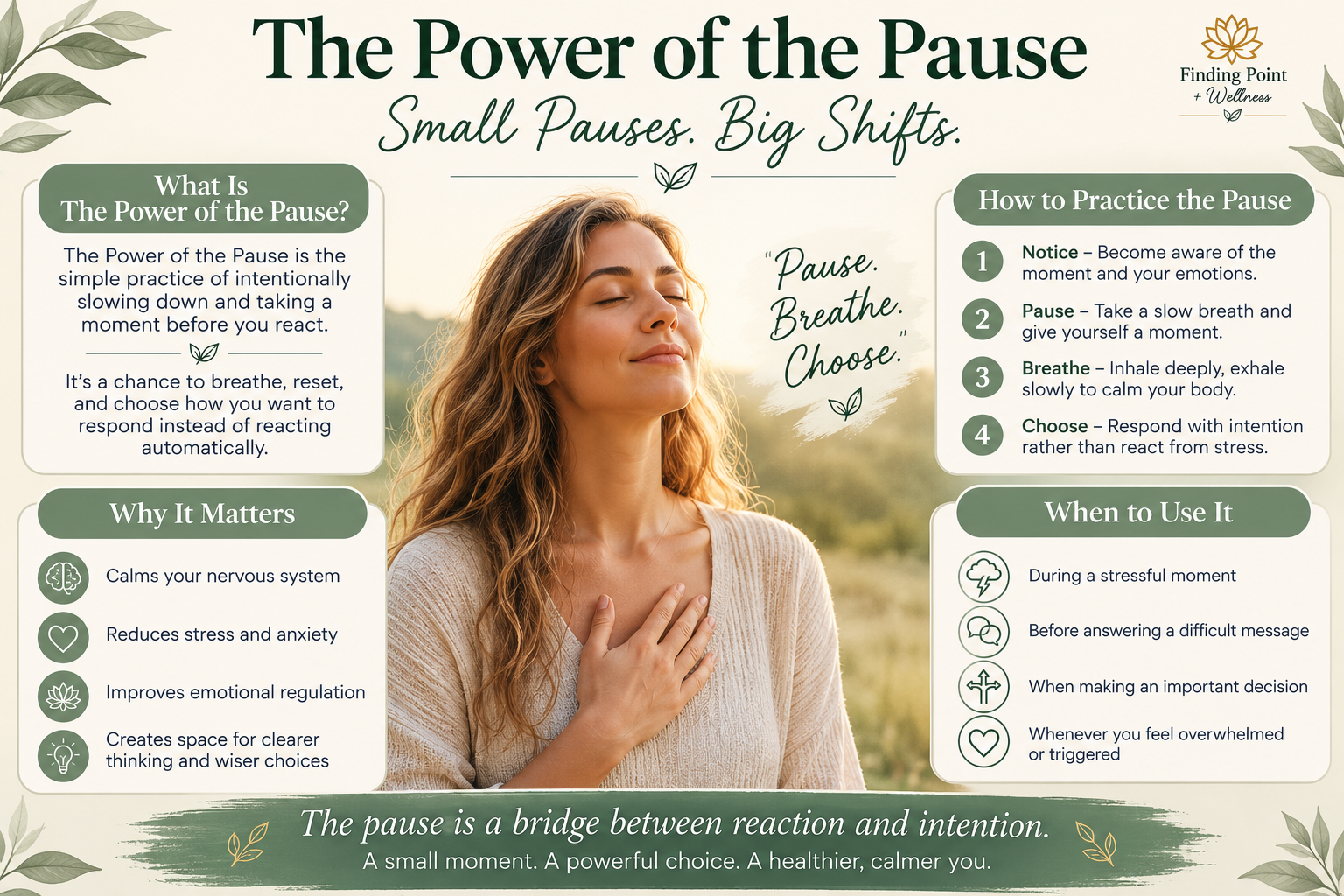
Somatic self-regulation supports emotional health by helping us create a pause between what we feel and what we do next. This pause can be very small, but it can change the direction of an entire moment. We may still feel anxious, hurt, angry, or overwhelmed, but we have a little more room to choose our response. That room is where self-compassion, communication, boundaries, and healthier coping can begin.
For example, if I notice my chest tighten during a disagreement, I can take that as a cue to slow down instead of escalating. If we notice numbness or disconnection after a long day, we can gently reconnect through movement, warmth, music, journaling, or a grounding practice. If our body feels restless, we can ask whether we need to walk, stretch, shake out tension, or take a break from stimulation. Each of these choices helps us work through emotional experiences without turning against ourselves.
Research and mental health education often describe self-regulation as the ability to manage emotions, thoughts, impulses, and behaviors during stress. In everyday language, I would say it is the ability to stay connected to ourselves while life is asking a lot of us. Somatic self-regulation adds another layer by reminding us that the body can be a resource. We do not have to think our way through every feeling. Sometimes we can feel, breathe, notice, move, and soften our way back into steadiness.
Working Through Emotional Overwhelm
When emotions feel big, I find it helpful to work with smaller steps rather than trying to solve everything at once. We can begin by naming what is present in gentle language: “Something in me feels anxious,” “My body feels tired,” or “I feel a little disconnected right now.” This kind of wording creates space. It helps us notice the experience without becoming completely defined by it.
Then we can ask, “What would help my body feel one percent more supported?” Maybe the answer is water, a slower breath, stepping outside, turning down noise, texting a safe person, journaling, or resting a hand on the heart. Healing often begins with very small acts of care. These small acts can become a pathway toward healing through compassion, especially when we are learning to soften shame, self-criticism, or the belief that we should be handling everything perfectly.
A helpful way to work through overwhelm is to focus on one small body-based choice at a time. If we try to fix the whole situation while we are activated, we may feel even more flooded. But if we choose one small support, the body often begins to feel less alone. We might drink a glass of water, unclench our hands, step into another room, place our feet firmly on the floor, or say, “I need a moment before I answer.” These small choices can create a sense of agency, which is an important part of emotional healing.
It can also help to use gentle tracking language. Instead of saying, “I am a mess,” we might say, “I notice my body feels overwhelmed.” Instead of saying, “I cannot handle this,” we might say, “Something in me needs support right now.” This kind of language matters. It softens shame and helps us stay in relationship with ourselves. We are not making the feeling bigger by noticing it. We are giving it a place to be understood.
Learning the Skill in Everyday Life
Somatic self-regulation becomes easier when we practice during ordinary moments, not only during hard ones. We might take ten seconds before starting the car to notice our breath. We might pause before answering a message. We might stretch before bed or feel our feet on the floor before a conversation. These tiny practices teach the body, little by little, that support is available.
We can also use somatic awareness when we notice patterns. For example, if I always feel tightness before setting a boundary, I can pause and support my body before speaking. If we feel overwhelmed in busy spaces, we can practice orienting to one calm detail in the room. If conflict makes us want to shut down, we can gently notice the impulse, feel our feet, and remind ourselves that we can take time.
Common Moments When Somatic Self-Regulation Can Help
Somatic self-regulation can be useful in many ordinary moments. We might use it before a hard conversation, after a stressful email, during a wave of anxiety, when we feel emotionally shut down, or when we notice ourselves spiraling into self-criticism. It can also support us during transitions, such as leaving work and coming home, waking up in the morning, preparing for sleep, or moving from one responsibility to another.
One everyday example is bedtime. Sometimes the mind is ready to sleep, but the body still feels on alert. In that moment, we can create a soft routine: dim the lights, slow the pace, stretch gently, place a hand on the heart, and let the exhale lengthen naturally. Another example is after conflict. We may want to replay every word, but the body may need grounding first. Feeling our feet, washing our hands with warm water, or taking a slow walk can help us return to ourselves before we try to make sense of everything.
Somatic self-regulation is especially helpful when we are learning new emotional health skills. New skills often feel awkward at first because the body is used to familiar patterns. If we are used to rushing, slowing down may feel uncomfortable. If we are used to minimizing our needs, pausing to notice them may feel unfamiliar. That does not mean we are doing it wrong. It means we are practicing something new with a nervous system that needs time, repetition, and kindness.
This is not about becoming perfectly calm. It is about becoming more connected, more aware, and more able to meet ourselves honestly. The Substance Abuse and Mental Health Services Administration notes that mental health includes emotional and social well-being, and somatic self-regulation can support that broader sense of wellness by helping us care for what is happening inside, moment by moment.
A Simple Somatic Reset Practice
Here is a short practice we can try when life feels a little too loud:
1. Pause and notice where your body is making contact with the chair, floor, or surface beneath you.
2. Let your eyes gently move around the space and name three neutral or pleasant things you see.
3. Place one hand somewhere comforting, such as the chest, arm, or belly.
4. Take one natural breath in, then let the exhale be a little slower than usual.
5. Ask yourself, “What do I need next: movement, rest, space, support, water, or a kind word?”
This practice can take less than a minute. It is not meant to fix every feeling. It is meant to help us return to ourselves with steadiness. Over time, these moments can build emotional resilience and make it easier to move through stress without abandoning our own needs.
If this practice feels too simple, that is okay. Simple does not mean ineffective. Many regulation skills work because they are repeatable, accessible, and easy to remember when we are under stress. The more often we practice in small ways, the more familiar the pathway becomes. We are giving the body a new pattern: notice, pause, support, choose.
How to Build a Somatic Self-Regulation Practice
Building a somatic self-regulation practice does not require a perfect routine. I often encourage starting with one body cue and one supportive response. For example, if I notice jaw tension, my response might be to soften my tongue and let my shoulders drop. If we notice shallow breathing, our response might be to slow the exhale. If we notice a sense of panic, our response might be to orient to the room and name what is actually present.
It can help to choose a few anchor moments during the day. We might practice when we wake up, before meals, after checking email, before entering the house, or before going to sleep. The practice can be as short as ten seconds. Over time, these small pauses can help somatic self-regulation become part of how we care for ourselves, rather than something we only remember when we are overwhelmed.
We can also make the practice personal. Some bodies respond well to stillness, while others need movement. Some people feel calmer with warmth, music, nature, or gentle pressure. Others feel supported by writing, naming sensations, or looking at familiar objects. The point is not to copy someone else’s exact method. The point is to learn what helps our body feel a little more present, supported, and able to stay with the moment.
Meeting Ourselves With Care
Somatic self-regulation invites us into a different relationship with ourselves. Instead of judging the body for feeling anxious, tired, guarded, or overwhelmed, we begin to listen. We learn that our reactions often make sense when viewed through the lens of emotional safety, past experiences, stress, and unmet needs. This understanding can help us move away from inner criticism and toward gentle responsibility.
As we practice, we may also become more mindful of our coping patterns. Some habits were once ways to get through difficult moments, even if they no longer serve us well. Exploring coping mechanisms with compassion can help us choose new responses that support who we are becoming, not just who we had to be in survival mode.
There is also no need to turn somatic self-regulation into another standard we must meet perfectly. Some days we will remember quickly. Other days we may only notice after we have already reacted. Even that noticing matters. We can gently say, “I see what happened. My body was overwhelmed. What support do I need now?” This turns a difficult moment into an opportunity for learning, repair, and self-understanding.
Final Thoughts
Somatic self-regulation is a gentle way of coming home to the body. It helps us notice stress sooner, respond to emotions with more care, and build a stronger sense of inner steadiness. We do not have to master it all at once. We can begin with one breath, one pause, one hand on the heart, one moment of noticing. As we continue, we may find that our relationship with stress begins to change. Instead of seeing stress as proof that something is wrong with us, we can begin to see it as a signal asking for attention, support, and compassion.
Each time we practice, we are reminding ourselves that we are worthy of patience. We are allowed to slow down. We are allowed to feel and still be safe. And together, one compassionate moment at a time, we can learn to work with the body instead of against it.
For anyone beginning this work, I would offer this reminder: go slowly, stay gentle, and let the body learn through repetition. Somatic self-regulation is not about becoming a different person. It is about becoming more available to ourselves. It is about learning that we can feel, pause, breathe, choose, and return. And with time, those small returns can become a meaningful foundation for emotional health, self-trust, and everyday healing.
