How to Set Boundaries for Yourself: Developing Emotional Health
Learn how to set boundaries for yourself in a gentle, emotionally healthy way. Explore simple examples, practical steps, and supportive language for protecting your peace without guilt.
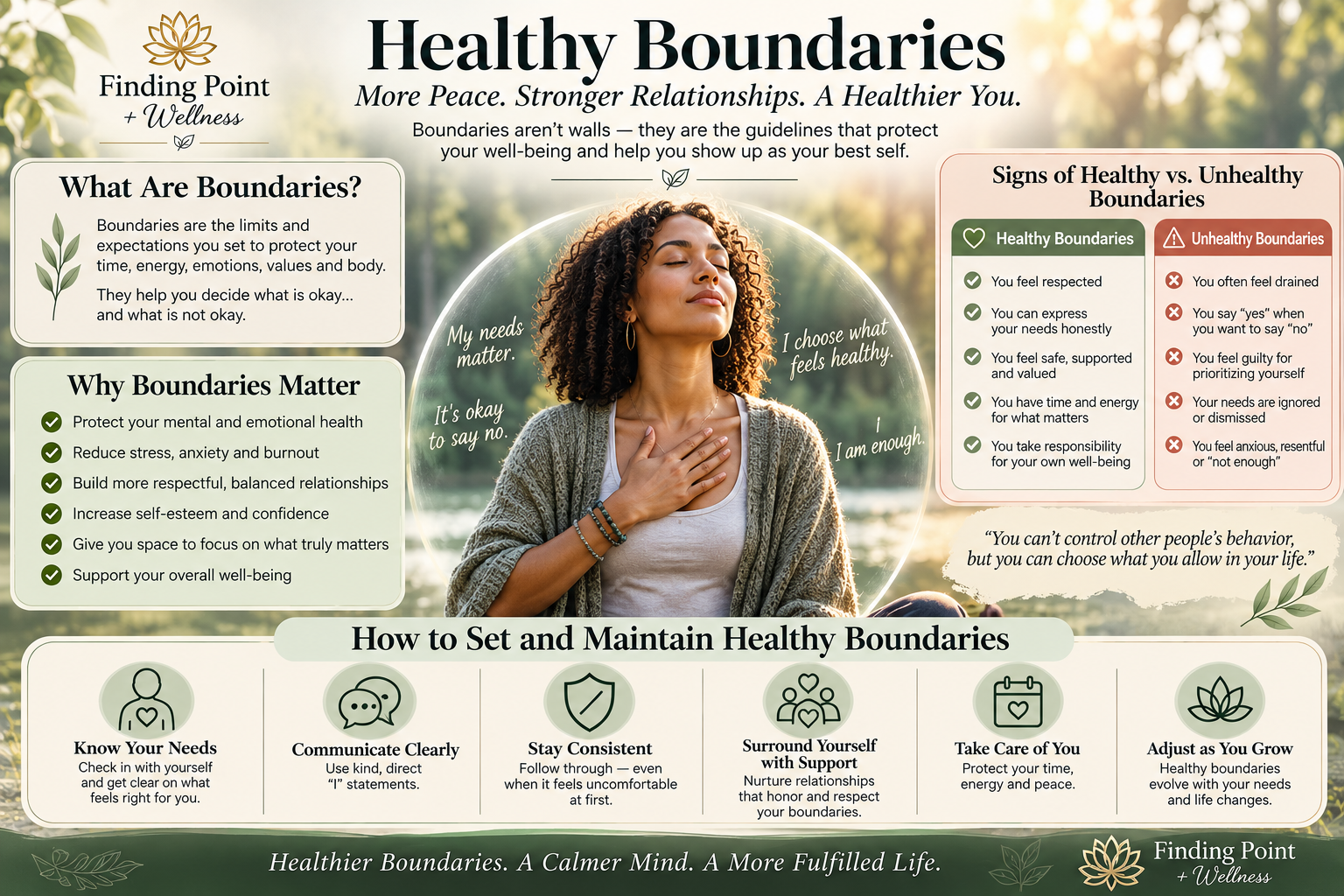
Setting boundaries for yourself is one of the most meaningful ways to care for your emotional health. I like to think of boundaries as quiet inner agreements that help us stay connected to ourselves while still staying connected to others. They are not walls, punishments, or signs that we no longer care. Healthy personal boundaries are gentle limits that help us notice what we need, what feels safe, and what allows us to show up with more honesty, steadiness, and self-respect.
Many of us were never really taught how to set boundaries. We may have learned to be agreeable, helpful, easygoing, or emotionally available, even when our bodies and minds were asking for rest. Over time, saying “yes” when we mean “no” can lead to resentment, stress, emotional exhaustion, or a quiet feeling of being disconnected from ourselves. Learning how to set boundaries with ourselves gives us a way to return to our own center with care and compassion.
At Finding Point, we often talk about whole-person wellbeing, emotional regulation, stress, self-care, and mindful presence. Boundaries naturally belong in that conversation. When we practice emotional self-regulation, we begin to notice what is happening inside of us before we become overwhelmed. When we explore finding our center, we learn to pause and reconnect with what feels grounded. When we make space for self-care, we begin to understand that our needs matter too.
What Are Boundaries, Really?
A boundary is simply a limit that helps us care for our emotional, mental, physical, or time-related needs. It is a way of saying, “This is what I can do,” “This is what I cannot do,” or “This is what I need in order to feel balanced.” Boundaries can help reduce emotional overload, protect our energy, and support healthier relationships. Several mental health resources describe boundaries as an important part of wellbeing because they help us understand our limits and communicate them more clearly.
For example, a time boundary might sound like, “I can talk for about 20 minutes, but then I need to rest.” An emotional boundary might sound like, “I care about you, and I also need this conversation to stay respectful.” A personal space boundary might sound like, “I need some quiet time before I respond.” These are not harsh statements. They are kind, honest, and clear.
Why Setting Boundaries Can Feel So Hard
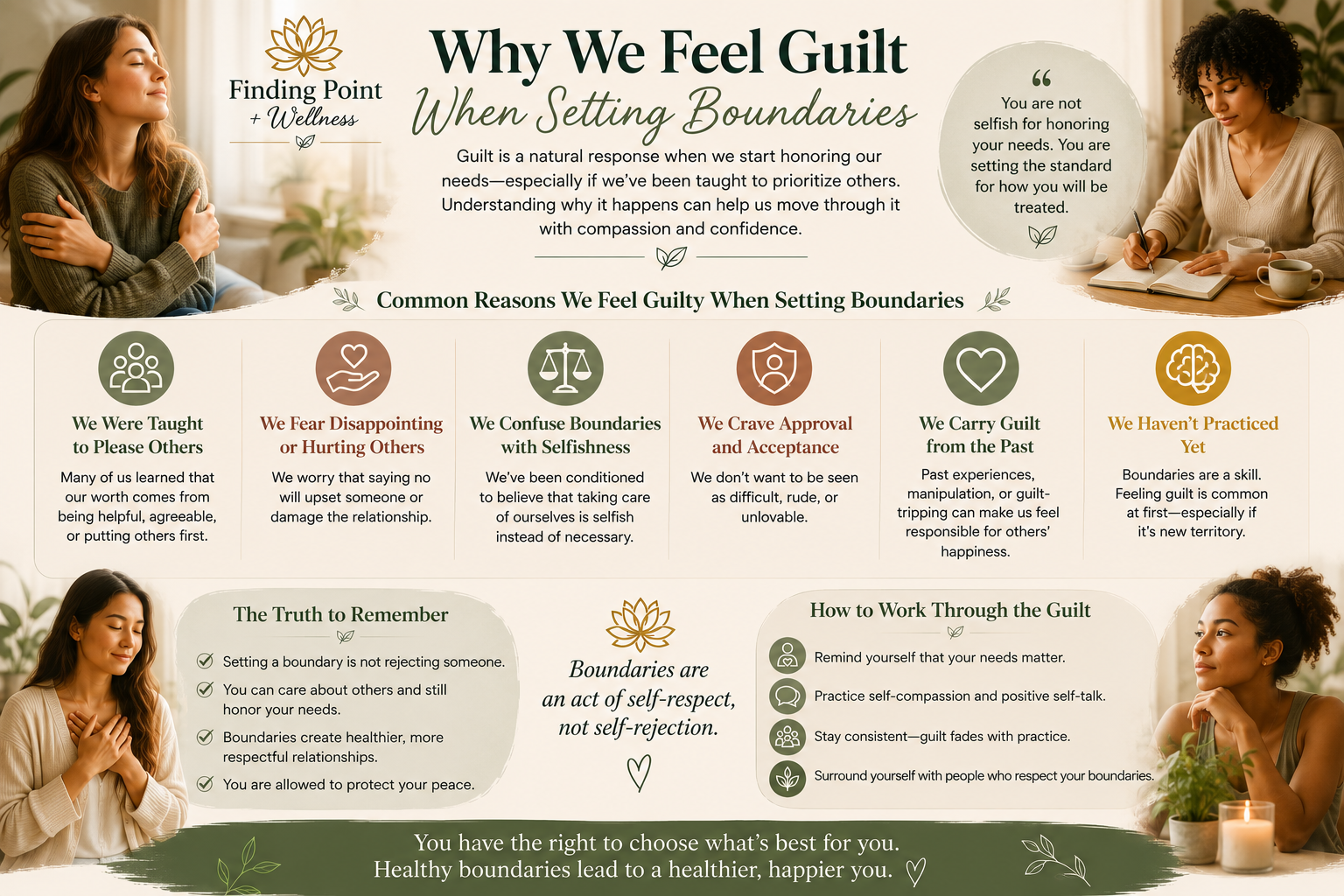
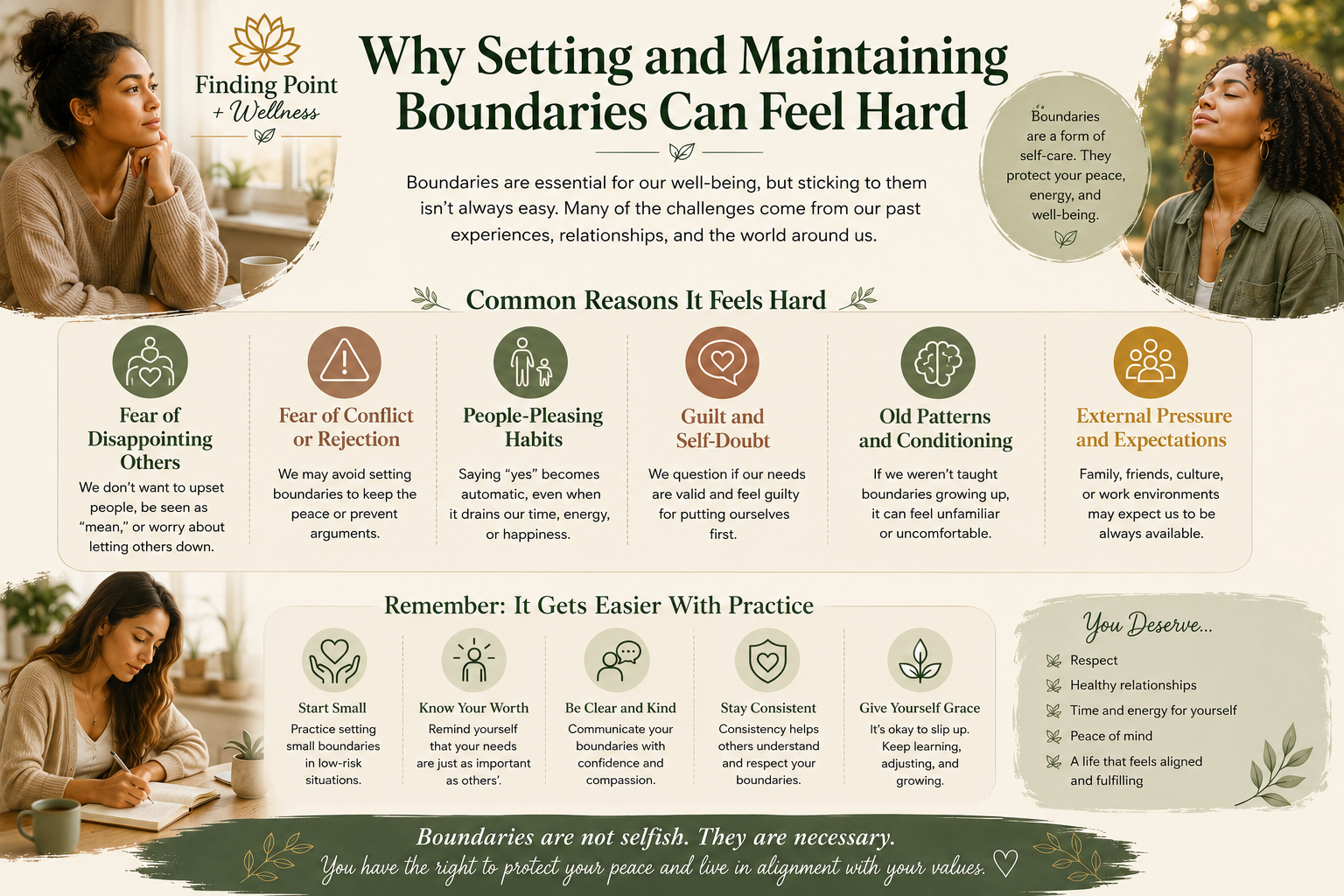
If setting boundaries feels uncomfortable, you are not alone. Sometimes we feel guilty because we worry we are disappointing someone. Sometimes we fear being misunderstood. We may wonder if we are being selfish, rude, or too sensitive. But in emotional health work, we often learn that discomfort does not always mean something is wrong. Sometimes discomfort simply means we are practicing something new.
I remind myself that a healthy boundary is not a rejection of another person. It is a way of staying honest with myself. When we ignore our needs for too long, our nervous system may begin to speak through tension, irritability, fatigue, anxiety, or shutdown. A boundary can become a gentle form of listening. It says, “I hear myself. I matter. My peace matters too.”
Step 1: Notice Where You Feel Drained
Before we can set a boundary, we usually need to notice where one is needed. A helpful place to begin is by asking, “Where do I feel stretched too thin?” or “Where do I keep saying yes when something inside of me says no?” We can pay attention to the moments when we feel resentment, pressure, dread, or emotional heaviness. These feelings are not failures. They are information.
For example, maybe I notice that I feel anxious every time I answer messages late at night. That may be a sign that I need a communication boundary. Maybe we notice that we feel exhausted after agreeing to every family request. That may be a sign that we need a time or energy boundary. The goal is not to judge ourselves. The goal is to listen with curiosity.
Step 2: Start Small and Be Specific
Boundaries do not have to begin with big conversations. Sometimes the most healing changes are small and steady. We can start with one area of life and choose a simple, specific boundary. Instead of saying, “I need everyone to respect me more,” we might say, “I am not available for phone calls after 8 p.m.” Instead of saying, “I need more space,” we might say, “I need 30 minutes alone after work before I talk through the day.”
Specific boundaries are easier to understand and easier to practice. They also reduce confusion for the people around us. We do not have to over-explain. We can be warm, steady, and brief.
Step 3: Use Gentle, Clear Language
One of the kindest ways to set a boundary is to speak from our own experience. This keeps the conversation softer and less blaming. We can use language like:
· “I care about this, and I need a little time to think before I answer.”
· “I am not able to take that on right now.”
· “I want to be present, but I need to rest tonight.”
· “I can help for one hour, but I cannot stay longer than that.”
· “I am open to talking when we can both speak calmly.”
These statements are not cold. They are honest. They help us protect the relationship while also protecting our inner world. When we practice this kind of communication, we are learning a new emotional health skill.
Step 4: Expect Some Discomfort and Stay Compassionate
Sometimes, when we first begin setting boundaries, others may need time to adjust. We may need time to adjust too. If we are used to being available all the time, a simple “I can’t tonight” may feel surprisingly heavy. Sometimes we may feel unnecessary guilt, not because we're wrong, but because setting healthy boundaries is new. This is where self-compassion becomes important.
We can remind ourselves: “I am allowed to learn.” “I am allowed to have limits.” “I can be caring and still say no.” This gentle inner language helps us stay connected to ourselves while we practice. If guilt comes up, we can breathe, pause, and remember that guilt is a feeling, not always a fact.
Step 5: Follow Through With Care
A boundary becomes meaningful when we gently follow through. If I say I am not answering messages after 8 p.m., then I practice putting my phone away. If we say we need respectful conversation, then we may pause a conversation that becomes hurtful. Follow-through does not need to be dramatic. It can be calm and consistent.
For example, if someone keeps pushing after we say no, we might repeat, “I understand this matters to you, and my answer is still no.” If a conversation becomes emotionally overwhelming, we might say, “I need to pause and come back to this later.” Repeating a boundary is not unkind. Sometimes it is how we help ourselves stay grounded.
Common Boundary Examples
Here are a few everyday examples of healthy boundaries we can practice:
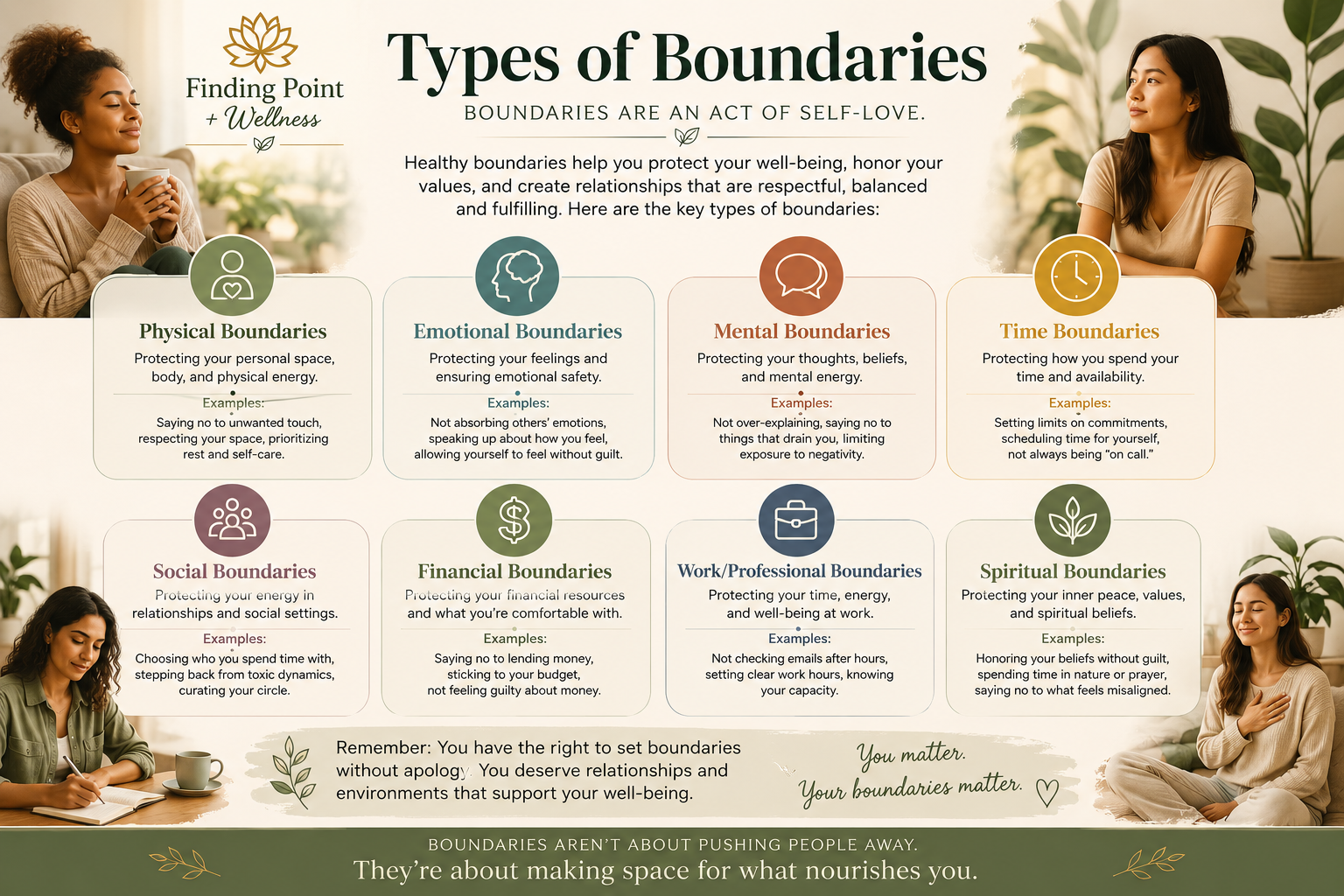
· Time boundary: “I can meet on Saturday morning, but I need the afternoon for rest.”
· Emotional boundary: “I want to support you, but I am not able to process this conversation right now.”
· Work boundary: “I will respond during work hours tomorrow.”
· Relationship boundary: “I am willing to talk through this, but I need us to avoid name-calling.”
· Self-boundary: “I am going to pause before saying yes so I can check in with myself first.”
Self-boundaries are especially important. Sometimes the boundary is not only with another person; it is also with our own patterns. We may need to stop overcommitting, scrolling when we are depleted, people-pleasing, or ignoring our need for sleep. These small inner agreements help us build trust with ourselves.
How to Work Through Problems When Boundaries Are Challenged
If someone reacts poorly to a boundary, it can feel tender. We may want to take the boundary back just to restore comfort. In those moments, it helps to slow down. We can ask ourselves, “Is this boundary still true for me?” If the answer is yes, then we can stay kind and steady.
We can also offer reassurance without removing the boundary. For example: “I care about you, and I still need to leave by 7.” Or, “I understand you are disappointed, and I am not available for that commitment.” This allows us to hold compassion for the other person while still honoring ourselves.
If a boundary brings up fear, anxiety, or old pain, we may need extra support. Talking with a trusted friend, coach, counselor, or mental health professional can help us understand what is underneath the discomfort. We do not have to learn this alone.
A Gentle Practice for Building the Skill
One simple practice is to pause before answering requests. Instead of responding automatically, we can say, “Let me think about that and get back to you.” This creates a small space between pressure and choice. In that space, we can check in with our body, our energy, our schedule, and our emotional capacity.
We might ask: “Do I truly have the capacity for this?” “Am I saying yes from care or from fear?” “Will this choice support my wellbeing?” Over time, these questions help us become more honest with ourselves. They also help us build emotional resilience and inner safety.
Final Thoughts
Setting boundaries for yourself is not about becoming distant or hard. It is about becoming more honest, more present, and more connected to your own needs. Boundaries give us room to breathe. They help us notice where we end and where another person begins. They allow us to care without disappearing into everyone else’s expectations.
I believe we can be gentle and clear at the same time. We can love people and still have limits. We can be supportive and still need rest. We can be compassionate and still say no. With practice, boundaries become less like conflict and more like self-trust. They become a way of saying, “I am learning how to care for myself, too.”
